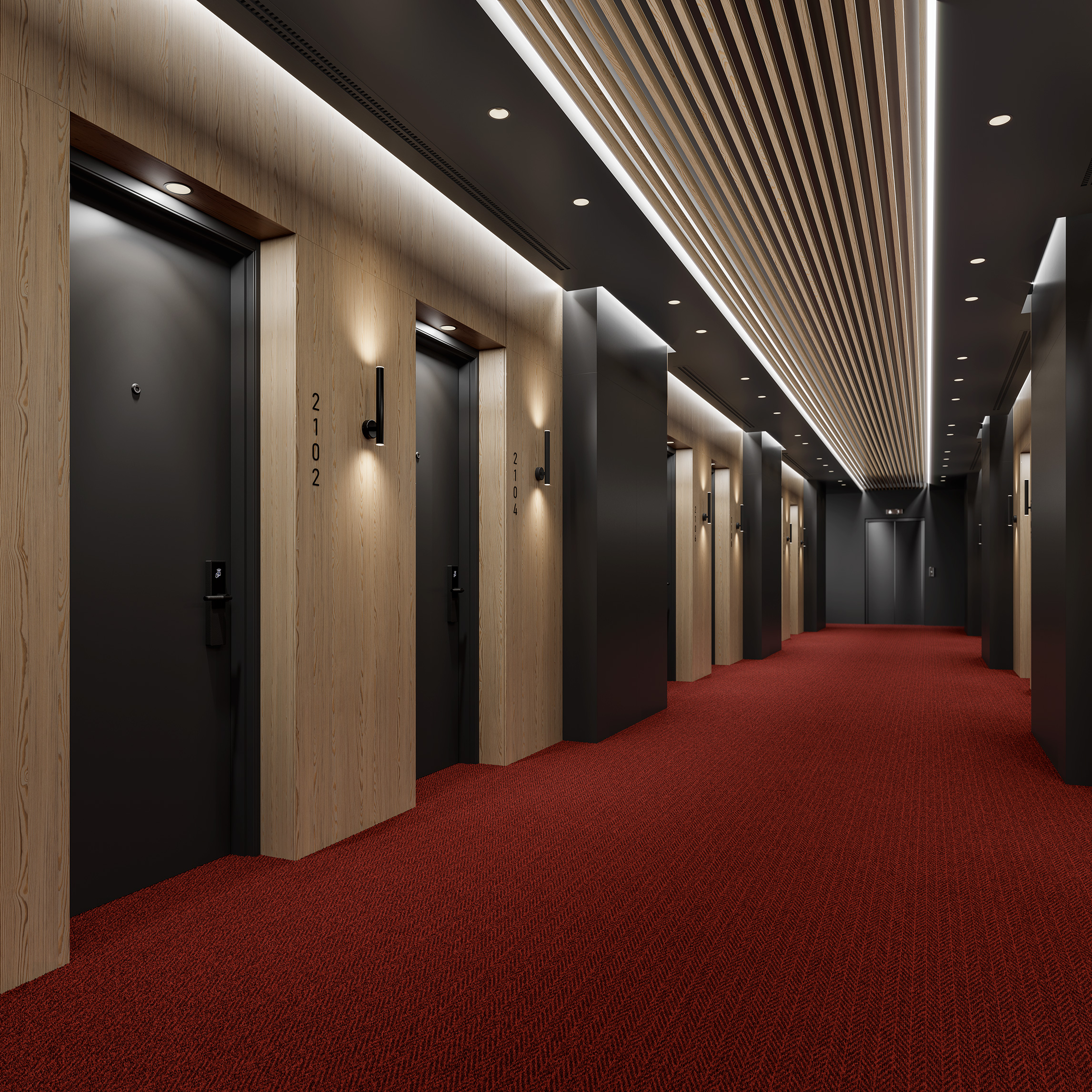
When selecting materials and colours for interior doors, understanding LRV may help designers make informed choices about how an interior door will affect the perception of light and space within a room. LRV is a measure of how much light a surface reflects on a scale from 0 (black, absorbing all light) to 100 (white, reflecting all light).
- Colours with a high LRV (closer to 100) means the colour reflects a lot of light, helping a room to feel brighter.
- Colours with a low LRV (closer to 0) means the colour absorbs more light, helping a room to feel darker.
Why LRV Matters in Interior Door DesignWhile neither LRV nor colour choice is regulated, they are tools widely used as part of good design principles across Europe. Three key reasons why LRV is a valuable tool for interior door design include:
- Enhancing Natural Light Flow – Lighter coloured interior doors, usually with a high LRV can help reflect natural and artificial light into darker spaces, contributing to a brighter and more open feel. Check out this hospital in Norway which opted for a mix of wood and contemporary colours.
- Accessibility and Contrast – Door colours with an adequate LRV contrast against the door trim, walls and floors may aid navigation for those with visual impairments. Read about How to use LRV as a tool to support guidelines in Interior Design here.
- Energy Efficiency – Choosing a lighter door colour, often with a high LRV, can reduce the need for artificial lighting, especially in windowless office spaces or corridors, Read more about designing Neuro-Inclusive Office Spaces.
By using LRV as a design tool when selecting coloured laminate for interior door design, architects and interior designers can enhance the practicality and aesthetic whilst ensuring it meets both functional and accessibility needs.